

|
Disclaimer: This article provides general information about home alert systems and is not medical advice. If you're unsure what level of support is appropriate, speak with your GP or ask about a needs assessment. |
The main difference is who receives the alert. A caregiver pager (or caregiver call bell) sends an alert directly to a family member or caregiver, making it ideal for homes where someone is available to help. It's a one-off purchase with no ongoing subscription fees. A monitored medical alarm connects to a 24/7 response centre that can contact emergency services if needed, typically for an ongoing weekly or monthly fee.
Quick Glance
Choose a caregiver pager if you:
• Have a family member or caregiver at home, or someone who can receive alerts via a smartphone.
• Want a one-off purchase with no ongoing fees.
• Need help with everyday assistance, such as getting out of bed, using the bathroom, meals, or overnight reassurance.
Choose a monitored medical alarm if you:
• Live alone or are often without someone nearby.
• Want access to a professional 24/7 emergency response service.
• Are comfortable with ongoing monitoring fees, which may be eligible for funding.
Many New Zealand households choose to use both: a caregiver pager for everyday assistance and a monitored medical alarm as an emergency backup.
What Is a Caregiver Pager?
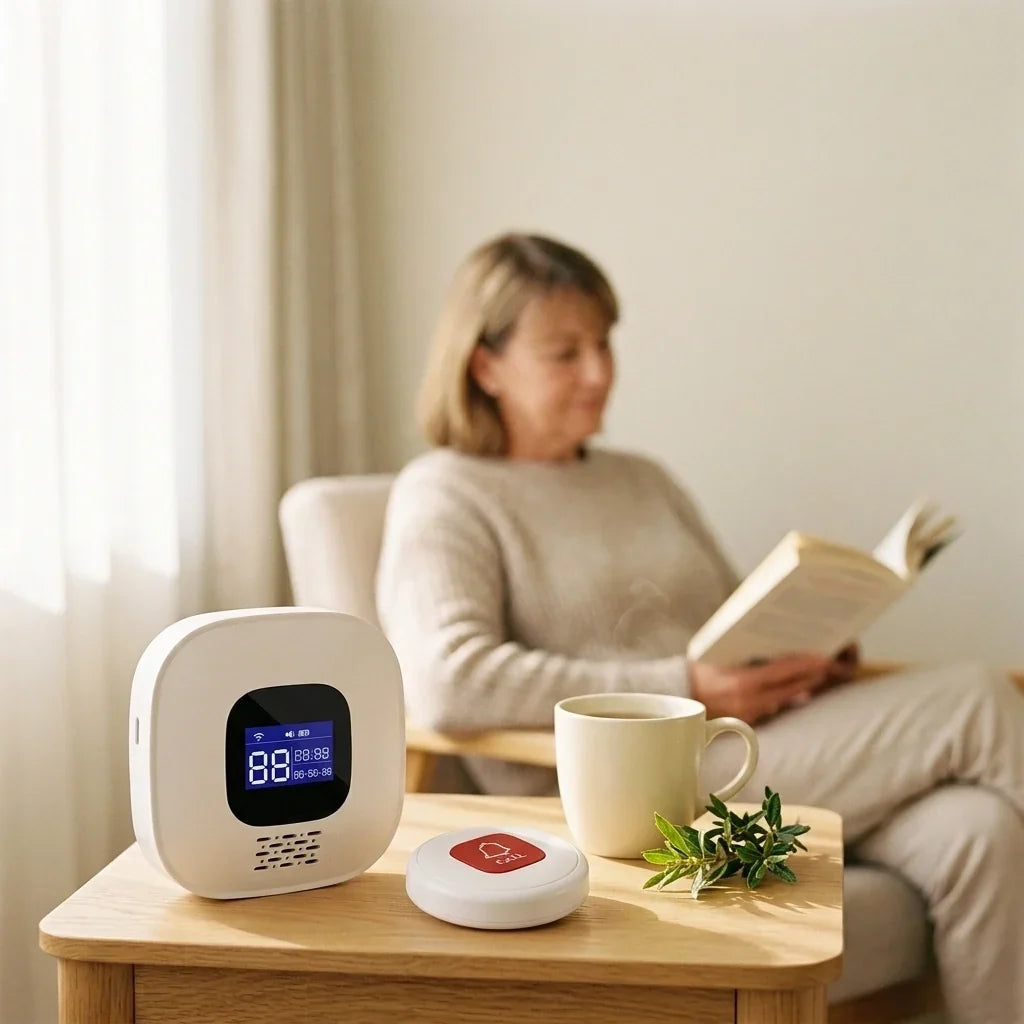
A caregiver pager, also known as a caregiver call bell, wireless caregiver call system, or wireless call button, is a simple home alert system that allows a person to call a family member or caregiver whenever they need assistance. It's a popular solution for elderly care, disability support, post-surgery recovery, and independent living at home.
The system consists of a wireless call button and one or more receivers. The call button can be worn as an SOS wristband or pendant, or placed beside the bed, in the bathroom, or anywhere help may be needed. When the button is pressed, the caregiver receives an instant alert through a plug-in receiver, a wearable pager, or both.
Many modern caregiver pager systems also include WiFi connectivity, sending notifications directly to your smartphone so you can stay connected even when you're away from home. Importantly, the button and receiver communicate using reliable RF wireless, so in-home alerts continue to work even if the internet is unavailable. WiFi is only required for remote smartphone notifications.
What Is a Monitored Medical Alarm?
A monitored medical alarm is a personal emergency alarm designed to connect the user with a 24/7 professional monitoring centre. Like a caregiver pager, it typically includes a wearable pendant or wrist button. However, instead of alerting a family member, pressing the button connects the user to a trained operator who can assess the situation, contact nominated family members or caregivers, and arrange emergency assistance if required.
In New Zealand, monitored medical alarms are provided as subscription services with ongoing weekly or monthly fees. Many are offered by providers accredited by the Ministry of Social Development (MSD), and some people may be eligible for government funding, depending on their circumstances.
A monitored medical alarm is generally the best option for people who live alone, spend long periods without a caregiver nearby, or need access to professional emergency assistance at any time of the day or night.
Side-By-Side Comparison
|
|
Caregiver pager / call bell |
Monitored medical alarm |
|
Who responds |
Family member or carer |
24/7 professional monitoring centre |
|
Ongoing cost |
None - one-off purchase |
Weekly subscription fee |
|
Best for |
Homes where a carer is present or nearby |
People living alone |
|
Coverage |
In and around the home; smart WiFi models notify your phone anywhere |
Home-based units; "anywhere" GPS options available |
|
Emergency services |
Family decides and calls 111 if needed |
Operator can dispatch an ambulance |
|
Funding |
Not typically funded (low one-off cost) |
May be funded via the Work and Income Disability Allowance for eligible people |
|
Setup |
Plug-and-pair, no installer |
Supplier-installed or couriered with setup support |
|
Extras |
Doorbell/visitor alert functions on some models |
Daily check services, falls detection options with some providers |
Where a Caregiver Pager Fits Best
A caregiver pager is designed to make home care easier by reducing the need for shouting, constant checking, or hovering. It provides a simple way for someone to call for help while maintaining independence and dignity.
Common uses for a wireless caregiver call bell include:
• Caring for an elderly parent at home - Place call buttons beside the bed, in the bathroom, or other key areas. Alerts can be received through a plug-in receiver and, with smart models, on a smartphone.
• Couples caring for each other - A wearable SOS wristband or pendant keeps the call button within reach throughout the day and night.
• Recovery after surgery or hospital discharge - Quick access to help with getting up, mobility, meals, or everyday tasks can make recovery at home more comfortable.
• Small care settings - Multiple wireless call points connected to one receiver provide a simple alternative to installing a wired nurse call system.
For most multi-room homes, a two-button caregiver pager system with a wearable receiver or caregiver watch provides flexible coverage. For people who move around frequently, a wearable wristband or pendant ensures the call button is always available.
Where a Monitored Alarm Is the Right Choice
A caregiver pager is only effective when someone is available to respond. If a person lives alone, spends long periods without nearby support, or may need emergency assistance when nobody is close by, a monitored medical alarm is the safer choice - a trained operator is always on the other end, day or night.
Funding is worth checking before you decide. Work and Income may cover a monitored medical alarm through the Disability Allowance for people who meet the criteria, using an MSD-accredited supplier such as Hato Hone St John. Criteria and rates change, so confirm the current details with Work and Income or the supplier.
Can You Use Both?
Yes, and many families choose to use both systems because they serve different purposes.
A monitored medical alarm provides a safety net for serious emergencies by connecting the user with a professional response centre when urgent help is needed. A caregiver pager is ideal for everyday assistance, such as help getting out of a chair, bringing a drink, moving around the home, or providing reassurance during the night.
Using both a caregiver call bell and a medical alarm gives families a balanced approach - simple, immediate support for daily needs while keeping professional emergency assistance available when it matters most.
FAQs
Is a caregiver pager the same as a medical alarm?
No. A caregiver pager (or caregiver call bell) sends an alert directly to a family member or caregiver, making it ideal for everyday assistance at home without ongoing subscription fees. A monitored medical alarm connects to a 24/7 professional monitoring centre that can assess emergencies and arrange help if required, usually through an ongoing subscription service. They are designed for different needs: a caregiver pager supports daily communication, while a medical alarm provides an emergency response backup.
Do caregiver pagers have monthly fees in NZ?
No. A caregiver pager or caregiver call bell is a one-off purchase with no contracts, monitoring subscriptions or monthly fees - once you buy the system, it's yours. This is the key cost difference from a monitored medical alarm, which charges an ongoing weekly or monthly fee for access to a 24/7 response centre.
Do caregiver pagers work without WiFi or the internet?
Yes. Most wireless caregiver pagers use RF wireless technology to connect the call button with the receiver, so in-home alerts continue to work without an internet connection. WiFi is only required for smart models that send app notifications to your smartphone when you are away from home.
Can a caregiver pager alert more than one person?
Yes. Smart WiFi caregiver pager systems can allow multiple family members or caregivers to receive smartphone notifications, so whoever is available can respond. Some systems also include wearable pager watches, allowing the main caregiver to receive alerts while moving around the home.
Are medical alarms funded in New Zealand?
Some eligible people may receive support for a monitored medical alarm through the Work and Income Disability Allowance, using an approved supplier. Eligibility requirements and funding details can change, so it is best to confirm the latest information with Work and Income or the medical alarm provider. Caregiver pagers are generally purchased as a one-off product and are not part of the medical alarm funding scheme.
What should an emergency call button for an elderly person include?
When choosing an emergency call button for an elderly person, look for features that make it easy and reliable to use, including a large, easy-to-press button suitable for people with limited dexterity; wearable options such as a wristband or pendant, so the button is always within reach; water resistance for use in bathrooms; adjustable receiver volume for clear alerts; and smartphone app notifications if family members need to receive alerts while away from home.
Choosing the Right Caregiver Alert System
If someone is living at home with family or a caregiver who can respond, a wireless caregiver pager can provide simple, immediate communication without monthly subscriptions or complicated installation.
For everyday support at home, explore the caregiver call bell collection at Health Marketplace NZ - including smart WiFi models, SOS wristbands, wireless call buttons and caregiver watch options. Product details and current pricing are available on each product page, with free New Zealand shipping on orders over $79.
|
Funding information referenced in this article is based on publicly available details from Work and Income New Zealand and Hato Hone St John, current as of August 2026. Please check the latest eligibility criteria before making decisions about medical alarm funding. This article provides general information only and is not medical advice. For advice about the right level of support, speak with a GP or needs assessment service. |


