

|
Please note: This article is general information, not medical advice. If a temperature or symptoms concern you — especially in a baby under three months — contact your GP, Plunket (0800 933 922), or Healthline (0800 611 116). |
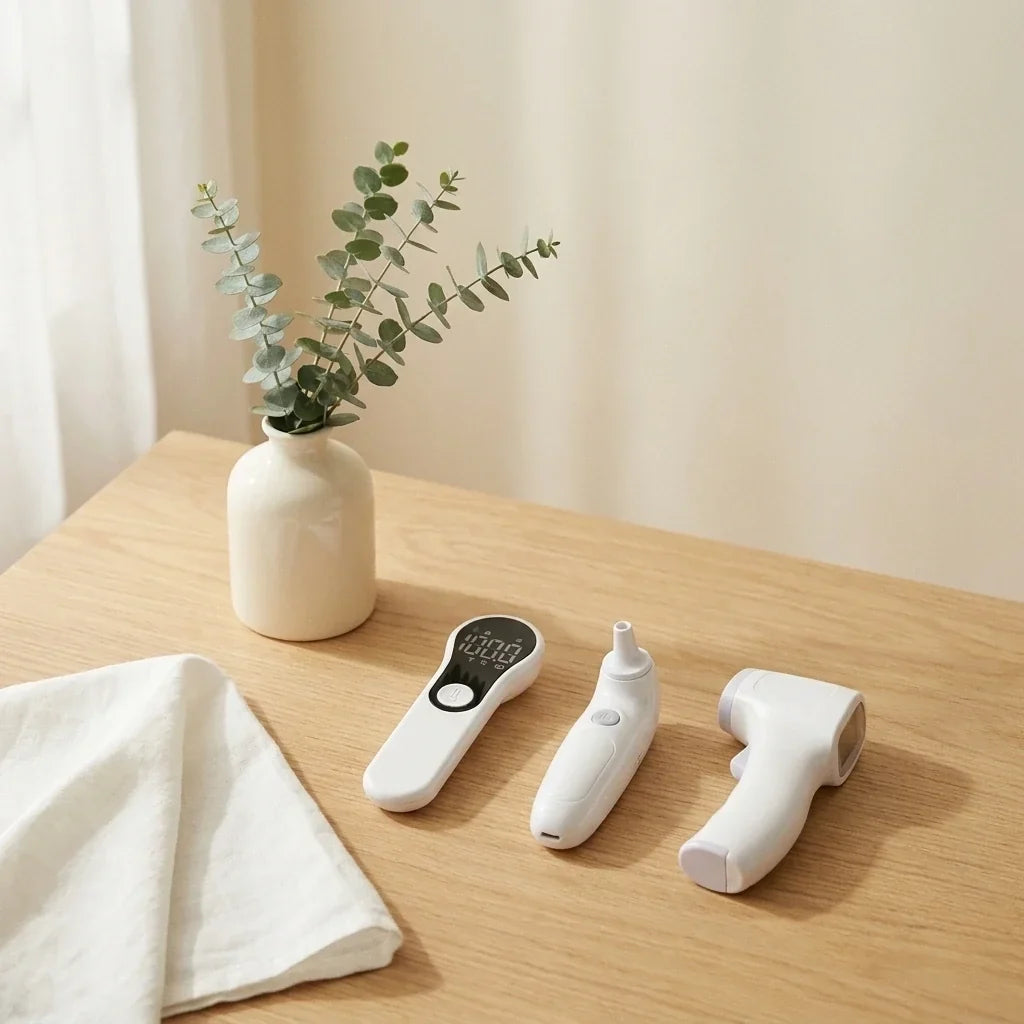
The main thermometer types for home use are digital stick thermometers, tympanic (ear) thermometers, and infrared forehead thermometers. For most NZ families, a digital stick thermometer is the reliable, affordable all-rounder — it suits every age from babies to adults and gives a clear, beep-confirmed reading. Ear and forehead thermometers trade a higher price for speed and convenience, particularly with children. Which suits you best comes down to your needs, budget and who will be using it.
Quick answer — which type suits whom:
• Digital stick thermometer — the whole family; the best-value all-rounder
• Tympanic (ear) thermometer — fast readings for wriggly children over six months
• Infrared forehead thermometer — quickest and no contact, handy for sleeping children
• Mercury thermometer — no longer recommended; replace with digital
How each thermometer type works
Digital stick thermometers
Digital thermometers use an electronic sensor in the tip to measure body temperature. Depending on the model, they can be used under the arm or orally, and some are also designed for rectal use in babies and young children — check the instructions for the methods your model supports. Modern versions read in well under a minute and beep when the reading is done, and flexible-tip models are more comfortable, particularly for children. A simple, affordable and versatile choice for the whole family; clean the tip between uses.
Tympanic (ear) thermometers
Ear thermometers use infrared technology to read temperature from the eardrum and can provide a reading within a second or two, which makes them particularly convenient for wriggly toddlers. Correct positioning matters — the probe needs to point at the eardrum, and ear wax can affect the result. They’re generally not recommended for babies under about six months, whose ear canals are too small for a reliable reading, so check the recommended age range for your model.
Infrared forehead thermometers
Forehead thermometers use infrared technology to provide fast, contact-free readings from a few centimetres away — especially useful for checking a sleeping child without disturbing them. They typically cost the most, and sweat, drafts, or coming in from the cold can nudge results, so make sure the forehead is clean and dry, and treat an unexpected reading as a prompt to re-check.
Mercury and other analogue thermometers
Glass mercury thermometers were once the standard, but they’re no longer recommended for home use — the glass breaks easily and mercury is hazardous. If you still have one in the drawer, replace it with a digital thermometer and check with your local council for safe disposal options rather than putting it in household rubbish.
Comparison at a glance
|
|
Digital stick |
Tympanic (ear) |
Infrared forehead |
|
How it reads |
Heat sensor in the tip |
Infrared from the eardrum |
Infrared from the skin |
|
Speed |
Under a minute |
1–2 seconds |
1–2 seconds |
|
Suits |
All ages (babies–adults) |
Over ~6 months |
All ages, incl. sleeping children |
|
Watch-outs |
Needs correct placement and stillness |
Ear wax, probe position |
Sweat, drafts, ambient temperature |
|
Typical cost |
Lowest |
Mid |
Highest |
|
Cleaning |
Wipe tip between uses |
Probe covers or wipe |
Minimal — no contact |
Which thermometer should you buy?
For most households, a digital stick thermometer is the place to start: affordable, versatile across every age group, and simple to use and clean. If you have young children and want faster checks, an ear thermometer (for speed) or a forehead thermometer (for contact-free convenience) makes a good second thermometer — an addition rather than a substitute. Whichever type you choose, read the instructions once before you need them at 2am, and check the battery regularly.
Taking a good temperature reading
A few simple habits give you more consistent readings:
• Use the same method each time so readings are comparable
• Wait 20–30 minutes after hot drinks, baths, or coming in from outside
• Record the temperature and the time if you may need to share it with a healthcare professional
A typical body temperature is around 37°C, but it varies between people and through the day. The reading, how it changes, and how the person feels are all useful when assessing an illness — the trend matters as much as any single number.
Frequently asked questions
What type of thermometer is most accurate for home use?
A digital stick thermometer is a reliable choice when used correctly. Ear and forehead thermometers can also provide accurate readings but are more sensitive to positioning and how they are used.
What’s the best thermometer for a baby?
A digital stick thermometer used in the armpit is a common choice for babies; some models are also suitable for rectal use when following the manufacturer’s instructions. Ear thermometers aren’t generally advised under about six months. For a baby under three months with a fever, seek medical advice promptly.
Are forehead thermometers accurate?
Yes. Infrared forehead thermometers can provide reliable readings when used correctly — held at the right distance, on a clean, dry forehead, indoors. Sweat, drafts and temperature changes can affect results, so re-check an unexpected reading.
Can I still use a mercury thermometer?
Mercury thermometers are not recommended for home use because they can break and expose you to hazardous mercury. Replace yours with a digital thermometer and check with your local council for safe disposal options.
What is a normal temperature?
Around 37°C is typical, but normal temperature varies between people, age, time of day and measurement method. Consider the reading alongside how the person feels. If you’re concerned, contact your GP or Healthline.
If your medicine cabinet needs an update, Health Marketplace NZ stocks a fast-read digital thermometer with a flexible tip that suits the whole family, with free NZ shipping on orders over $79. See the blood pressure monitors and thermometers collection: healthmarketplace.co.nz/collections/blood-pressure-thermometers
|
A final note: This guide is general information drawn from NZ child-health and home-care guidance. Recommendations can change — always follow the advice of your own doctor, nurse, or Plunket, and the instructions supplied with your thermometer. |


